Teach your dog step by step, with treats, clear cues, and short, consistent practice sessions.
I’ve trained many dogs to use a doggie door, and I’ll walk you through every step. This guide covers how to train a dog to use a doggie door? from choosing the right door to troubleshooting fear or confusion. You’ll get clear steps, practical examples, and tips I learned working with anxious and stubborn dogs. Read on to gain confidence and help your dog move freely and safely.
Why teach your dog to use a doggie door?
Training your dog to use a doggie door improves freedom, reduces accidents, and saves your time. How To Train A Dog To Use A Doggie Door? is about teaching clear cues, building confidence, and shaping behavior in short steps. Dogs adapt quickly when training is consistent and rewards are meaningful. I’ll share what works, common mistakes, and the fastest path to success.

Choose the right doggie door and location
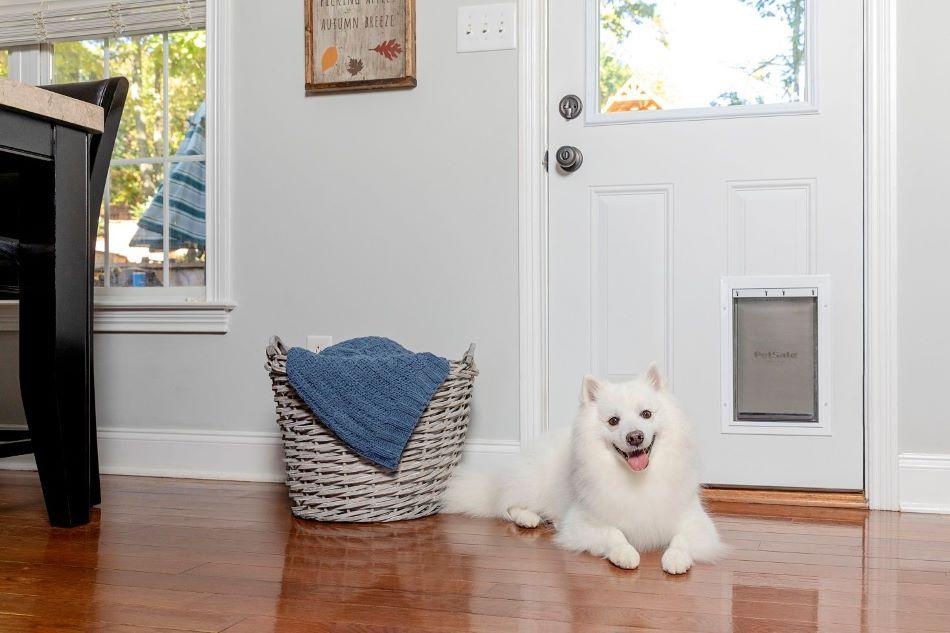
Pick a door sized for your dog. Measure your dog’s height and width. Choose a door with a flexible flap for small dogs and a sturdier flap for large dogs.
Consider location and safety. Place the door where your dog already spends time. Avoid noisy or busy entry points that might scare the dog. Make sure the dog can see clear paths on both sides.
Install with care. Follow manufacturer instructions. Ensure the flap swings freely and the bottom seal is secure to block drafts. A well-installed door makes training easier.
Prepare your dog and the environment
Let your dog explore the door while it is propped open. Allow sniffing and short, unscripted visits. Use calm voice and treats to create positive feelings.
Reduce distractions. Close other doors and turn off loud noises during training. Short sessions of five to ten minutes work best. Dogs learn faster with frequent, brief practice.
Assess motivation. High-value treats or a favorite toy speeds learning. Use treats your dog loves. If your dog is food-motivated, use small soft treats so training can use many repetitions.

Step-by-step training plan
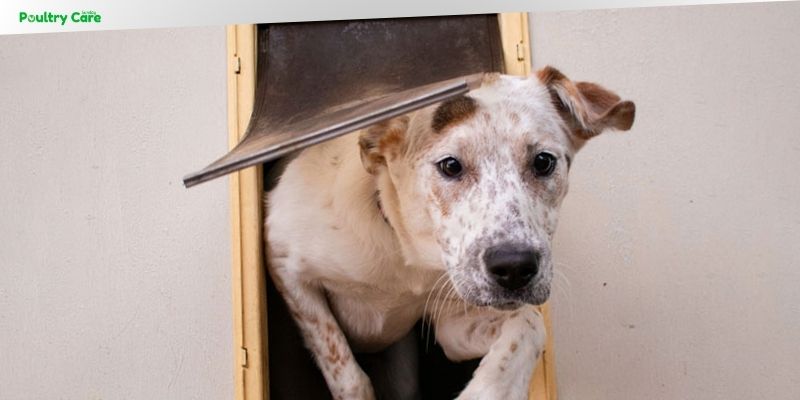
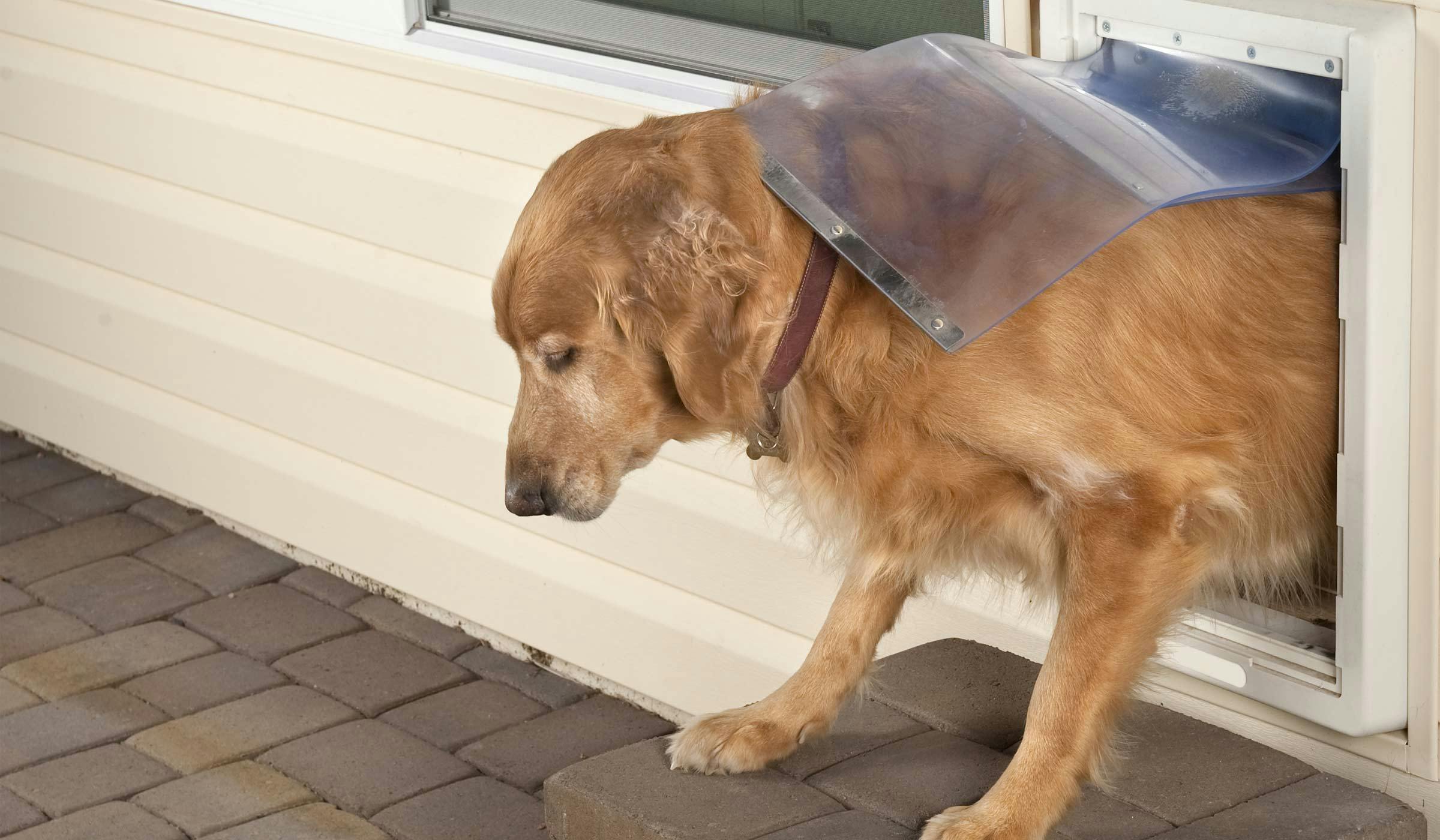
Step 1: Introduce the flap. Hold the flap up and lure your dog through the opening with a treat or toy. Reward as soon as all four paws pass through. Repeat five to ten times per session.
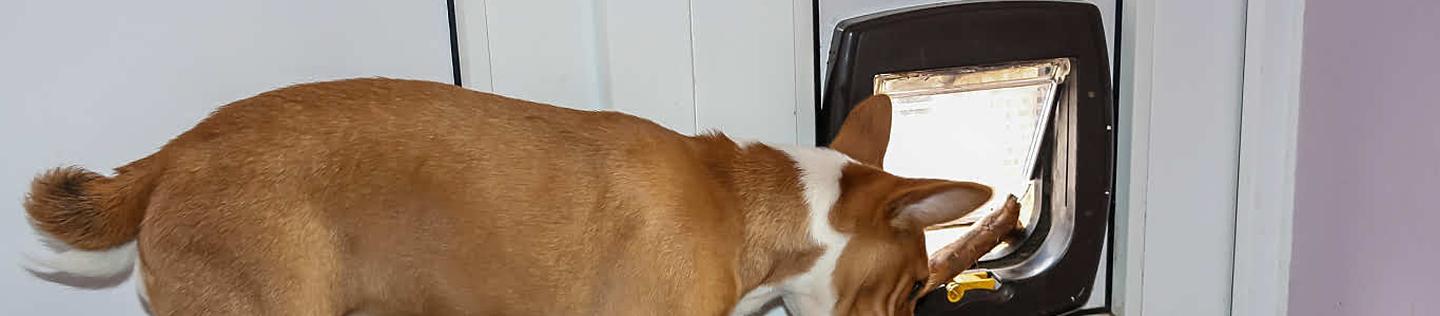
Step 2: Touch the flap. Lower the flap slightly so the dog must touch it to reach the treat. Mark the touch with a clicker or a word like “yes,” then reward. Repeat until the dog willingly nudges the flap.
Step 3: Push-through practice. Allow the flap to fall in front of the dog. Lure the dog through so it pushes the flap with the nose or body. Reward immediately on the other side. Increase distance gradually.
Step 4: Do it from both sides. Train exiting and entering in separate short sessions. Use a cue such as “door” or “out” consistently. Practice until the dog responds to the cue without a treat first.
Step 5: Reduce lure and rewards. Move to intermittent rewards. Praise and occasional treats will maintain the behavior. Shift to natural reinforcement, such as access to yard play.
Step 6: Add real-world scenarios. Practice when the yard is available, during different times of day, and with distractions. Keep sessions short and reward calm behavior.
Common problems and fixes
Problem: Dog is scared of the flap.
Fix: Re-introduce the flap gradually. Reward calm behavior outside the flap. Use treats near the flap until the dog approaches willingly.
Problem: Dog refuses to go through.
Fix: Shorten sessions and use higher-value treats. Try backing the dog gently through the flap once to show it’s safe.
Problem: Dog goes through but won’t come back.
Fix: Teach a reliable recall and use the door as part of the recall training. Reward returns with play or treats.
Problem: Door is too cold or noisy.
Fix: Add weather stripping or a quieter flap. Reduce movement or wind exposure near the door to make it less intimidating.

Training variations by age and temperament
Puppies
Puppies learn fast but have short attention spans. Use very short, frequent sessions. Combine house-training with the doggie door to create good habits early.
Senior dogs
Older dogs may have mobility issues or vision changes. Raise or widen the entry if needed. Train at the dog’s pace and use gentle encouragement.
Anxious or shy dogs
Go slowly and build trust. Spend more time on positive association with the door. Use calming signals and avoid forcing the dog.
Bold or stubborn dogs
Keep sessions short and consistent. Use firm cues and predictable routines. Make use of toys or play as a reward if treats aren’t effective.
Safety, maintenance, and legal notes
Safety first. Ensure the flap cannot trap a paw. Check for sharp edges and secure fasteners. Teach household members to respect the training cues.
Regular maintenance. Clean the flap and frame regularly. Inspect seals and hinges. A well-maintained door lasts longer and stays quieter.
Legal and neighbor considerations. If the doggie door opens to a shared space, check local rules. Keep your dog supervised until you trust its behavior around traffic or neighbors.
My experience and lessons learned
I once trained a fearful rescue who would not approach any door. I started with treats on the ground near the flap. Then I moved treats onto the flap and behind it. After several calm sessions, the dog pushed the flap by itself. Patience wins. Small wins matter.
Lesson learned: Never rush. Pushing a dog too fast creates fear and setbacks. Keep sessions short. Celebrate progress with praise and a calm tone. Consistency trumps intensity.
Quick PAA-style questions
What is the best age to start teaching a dog to use a doggie door?
Start as soon as the puppy is comfortable walking through basic doorways, usually around 8 to 10 weeks, and continue with short sessions.
How long does it take for a dog to learn the door?
Many dogs learn in a few days to a couple of weeks with daily short practice. Some anxious dogs may need longer consistent sessions.
Can older dogs be trained to use a doggie door?
Yes. Older dogs can learn, but you may need to adapt the pace and use gentler encouragement and physical adjustments.
How do I stop the dog from pawing at the flap at night?
Limit access or secure the flap at night and provide a routine bathroom schedule. Reward calm, quiet behavior and remove attention for persistent pawing.
Is a doggie door safe for small dogs?
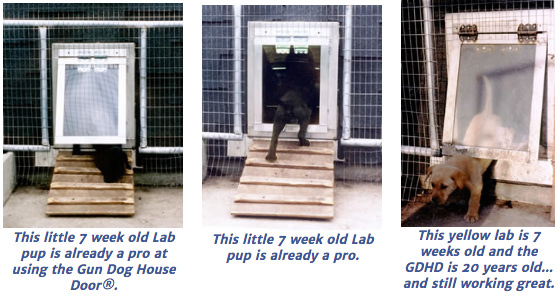
Yes, if you choose the correct size and install it low to the ground. Add steps or a ramp if needed for small breeds.
Frequently Asked Questions of How To Train A Dog To Use A Doggie Door?
How long will it take my dog to use the doggie door reliably?
Most dogs learn in days to weeks with daily short sessions. Progress depends on temperament and consistency.
What type of treats work best for training the doggie door?
Use soft, high-value treats that are easy to chew. Small portioned treats let you reward many repetitions.
Should I prop the flap open at first?
Yes. Start with the flap propped open so the dog can explore freely. Lower it gradually as confidence grows.
My dog learned to go out but not come back. How do I fix that?
Train a strong recall inside first and then at the door. Reward returns with play or treats to make coming back rewarding.
Can I teach multiple dogs to use one doggie door?
Yes. Train each dog individually and then practice with both present. Keep sessions short to reduce competition and stress.
Conclusion
Teaching your dog to use a doggie door is a practical skill that boosts freedom and reduces stress for both of you. Follow simple steps: choose the right door, start slow, use short sessions, reward clearly, and troubleshoot gently. Be patient and consistent. Try the plan today, track small wins, and adjust as needed. If this guide helped, subscribe for more training tips or share your doggie-door success story in the comments.