Yes — it is possible but very rare; properly vaccinated dogs are highly protected against rabies.
I have worked with veterinarians and pet owners for years. I explain how rabies vaccines work, why rare vaccine failures happen, and what to do if a vaccinated dog is exposed. This article answers the core question Can A Dog With Rabies Vaccine Get Rabies? and gives clear steps to protect your pet and family.

How rabies vaccines protect dogs
Rabies vaccines train the dog’s immune system to fight the rabies virus. The vaccine causes the dog to make neutralizing antibodies that stop the virus from spreading. When a dog has a proper immune response, the vaccine protects it from disease and from passing the virus to people.
Vaccines for dogs are highly effective. Most dogs develop strong immunity after the initial series and a timely booster. Studies and clinical experience show vaccinated dogs rarely develop rabies when exposed.

Can A Dog With Rabies Vaccine Get Rabies?
Can A Dog With Rabies Vaccine Get Rabies? Yes, but the chance is very low when vaccination is done correctly and boosters are kept up. Vaccine-induced protection is not absolute in every single animal. Immune systems vary, and a few dogs may not make enough antibodies after vaccination.
When a vaccinated dog gets rabies, it is usually due to one of a few problems. The dog may not have completed the vaccine series, may have an expired booster, may be immunocompromised, or may have been infected just before the vaccine took full effect. Knowing these risks helps you act quickly and wisely.
Reasons a vaccinated dog might develop rabies
-
Incomplete vaccination series
A puppy that missed doses or an adult without the full series may not be protected. Puppies need their full primary shots and their first booster on schedule. -
Lapsed boosters
Boosters maintain immunity. Long gaps after the last booster lower antibody levels. -
Immune suppression
Dogs with cancers, on chemotherapy, or on strong steroids may not respond well to vaccines. Their immune systems may fail to build enough protection. -
Improper storage or administration
Vaccines handled or stored incorrectly can lose potency. Vaccines must be kept cold and given by trained staff. -
Rare vaccine non-responders
A very small number of dogs do not respond to certain vaccines. These animals are unusual but possible. -
Infection prior to immunity
If a dog is bitten shortly before or right after vaccination, the virus can establish before the immune response matures.

Signs of rabies in vaccinated dogs
-
Behavioral change
Rabies may cause sudden fearfulness, aggression, or odd friendliness. Watch for rapid changes in temperament. -
Neurological signs
Seizures, paralysis, circling, and trouble swallowing can occur. These signs progress quickly in rabies. -
Excess salivation and difficulty eating
Rabies often causes drooling, choking, or a change in bark. These signs demand immediate attention.
Because rabies is almost always fatal once clinical signs appear, any neurologic or behavioral change after a bite must be taken seriously. Tell your vet the dog is vaccinated and provide vaccine dates.
What to do if your vaccinated dog is exposed
-
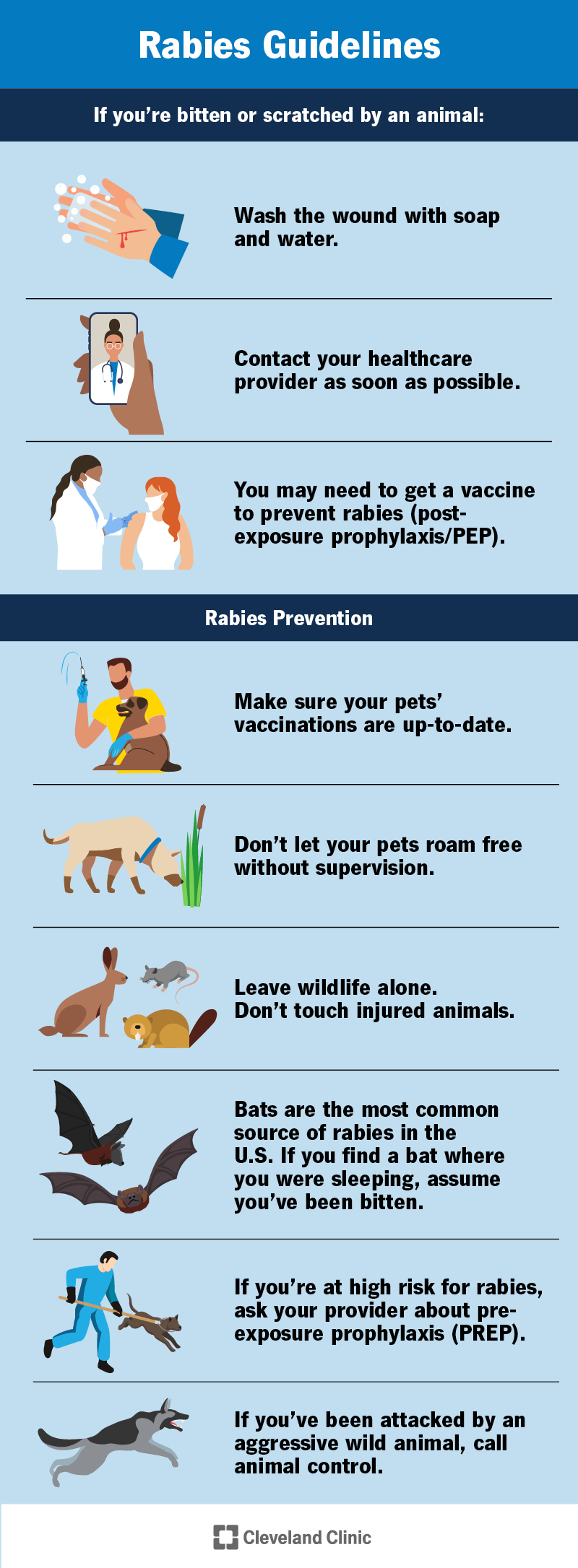
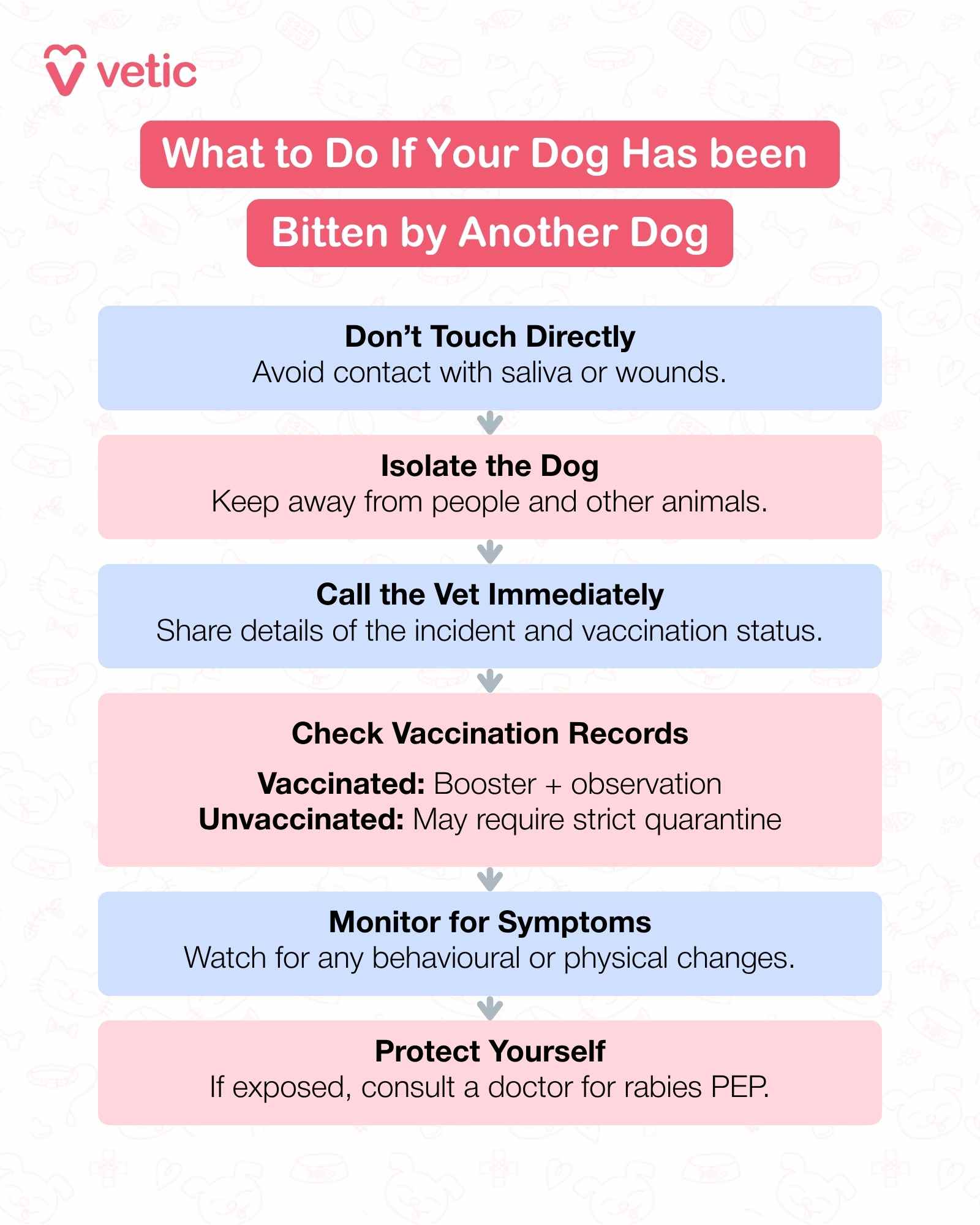
Isolate and restrain your dog
Keep the dog away from people and other animals until you talk to your vet. -
Call your veterinarian immediately
Provide details: date of vaccination, vaccine brand if known, when the exposure happened, and the animal that caused the bite. -
Follow the vet’s plan
Options may include immediate booster vaccination, a health observation period, or quarantine. In some cases, your vet may recommend testing the biting animal or local public health involvement. -
Monitor closely
Watch for any change in behavior or health for the recommended observation period. Report concerns right away.
Prompt action reduces risk and helps public health authorities decide if additional steps are needed.
Vaccination schedules, boosters, and testing
-
Typical schedule
Puppies usually start rabies vaccination at around 12–16 weeks. A booster is often given one year later. After that, boosters are given every 1–3 years, depending on vaccine type and local law. -
Titers and testing
A rabies antibody titer can show whether a dog has mounted an immune response. Titers are used mostly for international travel, research, or special cases and are not always accepted as a legal replacement for vaccination. -
Legal requirements
Many places require a current rabies vaccine by law. Keep certificates handy and follow local regulations.
Keeping vaccine records current and sharing them with your vet is a simple way to protect your dog and your community.

My experience, lessons learned, and practical tips
I once helped a family whose dog was bitten by a raccoon. The dog was vaccinated two years earlier but had missed a booster. We worked with the vet and public health to give an immediate booster and observe the dog. The dog remained healthy, and everyone got clear guidance. That case showed me three things I now tell every pet owner.
- Keep a digital and paper record of vaccine dates. It saves time in emergencies.
- Don’t delay boosters. A small skip makes decisions harder after a bite.
- Ask your vet about immune-suppressing conditions before vaccination. Tailor plans for special needs pets.
These tips come from hands-on experience and from watching how quick, calm action prevents worry and harm.
Prevention beyond vaccination
-
Reduce exposure risk
Keep dogs leashed in areas with wildlife. Supervise off-leash play in rural zones. -
Secure trash and pet food
Wildlife attracted to food sources brings them closer to pets. -
Prevent contact with wild animals
Teach children not to touch strange animals. Report animals that act oddly to local animal control. -
Community action
High vaccination rates in a neighborhood reduce rabies risk for everyone. Encourage neighbors to vaccinate.
Vaccination remains the cornerstone of prevention. The rest is common-sense steps that lower chance of exposure.
Frequently Asked Questions of Can A Dog With Rabies Vaccine Get Rabies?
What is the chance a vaccinated dog will get rabies?
The chance is extremely low when the vaccine series and boosters are up to date. Rare cases occur due to incomplete vaccination, immune suppression, or improper vaccine handling.
Should I get an immediate booster after a bite if my dog is vaccinated?
Contact your veterinarian right away; they will advise based on the dog’s vaccine history and the type of exposure. In many cases, an immediate booster and observation are recommended.
Can a titer replace a rabies vaccine?
A titer measures antibodies but is not always accepted legally as a vaccine substitute. Check local laws and talk to your vet about whether a titer makes sense for your situation.
How soon does rabies vaccine protect a dog after vaccination?
Immunity develops over days to weeks after vaccination, with full protection often considered after a few weeks. If exposure occurs very soon after vaccination, the vaccine may not have time to protect.
What should I do if my vaccinated dog shows strange behavior after a bite?
Isolate the dog and call your vet immediately. Tell the vet the dog’s vaccine dates and follow their guidance for testing, boosters, or quarantine.
Can a booster prevent rabies after exposure?
A prompt booster can help in many cases, especially if given very soon after exposure and if prior immunity exists. Your vet will weigh risks and recommend the best action.
Conclusion
Vaccination makes rabies in dogs rare but does not eliminate risk entirely. Understanding why Can A Dog With Rabies Vaccine Get Rabies? can happen helps you respond quickly and calmly. Keep vaccines current, act fast after any exposure, and work with your veterinarian to protect your dog and family.
Take action today: check your dog’s rabies records, schedule overdue boosters, and save your vet’s emergency number. Share your experience or questions below — I’d love to hear how you protect your pet.